
Baumullar
The hidden gem of German engineering
Origin: Germany
Founded: 1950s
The Aesthetic: Industrial European Modernism
Baumüller represents the peak of high-end German engineering, most famously recognized for the "Lama" collection of executive seating. While Danish design focused on wood and warmth, Baumüller leaned into the power of the "International Style"—utilizing heavy-gauge steel, precision mechanics, and premium leathers. The brand is a favorite among collectors who value industrial-grade durability paired with an avant-garde, minimalist silhouette. A Baumüller piece is often defined by its "floating" seat architecture and a level of structural permanence that far exceeds standard domestic furniture. These are "statement" pieces designed for high-power environments, blending the rigor of German craftsmanship with a sleek, 20th-century artistic edge.

The Baumüller Lama chair is a rare triumph of 1970s European design, offering an unrivaled seating experience that balances industrial strength with cloud-like comfort. Characterized by its sweeping, continuous tubular chrome frame, the Lama is more than a recliner—it is a sculptural statement.
This chair (c. 1970s) has a brilliant, high-polished chrome base for deep structural stability. Its low-slung, ergonomic silhouette is designed to provide full-body support, making it the ultimate retreat for a modern study or living space.
The seat of the chair has been newly reupholstered in high performance fabric (105,000 double rubs) soft “limestone” colour polyester fabric. The back of the chair has been reupholstered in a leather-like polyester in a matching "stucco" colour.
John Geiger
The architect of the executive lounge
Origin: Toronto, Canada
Founded: 1964 (Interiors International Ltd.)
The Aesthetic: High-End Architectural Minimalism
John Geiger was a visionary of the North American executive aesthetic, known for bringing a refined, European-influenced modernism to the high-end corporate and residential landscape. Through his firm, Interiors International Limited (IIL), Geiger bridged the gap between industrial production and artisanal quality. His work is characterized by "clean-line" geometry and a master-class use of premium materials, specifically exotic wood veneers and mirror-polished steel. Geiger’s designs were intended to project an image of success and permanence; they are physically heavy, intellectually sharp, and visually uncluttered. By focusing on integrated technology and modular luxury, he became the go-to designer for the modern "Power Office," creating pieces that remain timeless benchmarks of 20th-century professional elegance.

These Interiors International Limited (IIL) slipper chairs are a masterclass in Canadian modernism. Designed during the era when John Geiger’s firm was the gold standard for executive interiors, this pair perfectly captures the "Architectural Minimalism" that defined high-end 1970s spaces.
These chairs (c.1970s) have the original brown wool upholstery and metal button detail on the back. The chairs are in good condition with some marks on the chrome and upholstery. These are solid, well-made chairs with weight to the chrome frame. Can provide custom reupholstery services if required.
For more information on the designer refer here.
Poul Kjærholm
The master of Danish modernism
Origin: Øster Vrå / Copenhagen, Denmark
Founded: 1950s (Studio)
The Aesthetic: Minimalist Architectural Steel & Structural Elegance
Poul Kjærholm was a master of structural refinement and one of the most distinctive figures of the Danish modernist movement. While most of his contemporaries worked almost exclusively with warm timber, Kjærholm chose steel as his primary artistic medium, treating it with the same reverence and craft traditionally reserved for wood. Trained as a cabinetmaker before studying under Hans Wegner, his background in fine joinery allowed him to combine rigid industrial frames with soft, organic materials like leather, cane, and marble. His understated, architectural pieces—such as the iconic PK22™ lounge chair and PK80™ daybed—are celebrated for their logical clarity and effortless balance. Today, Kjærholm’s uncompromising designs reside in premier institutions around the globe, including the permanent collection of the Museum of Modern Art (MoMA).
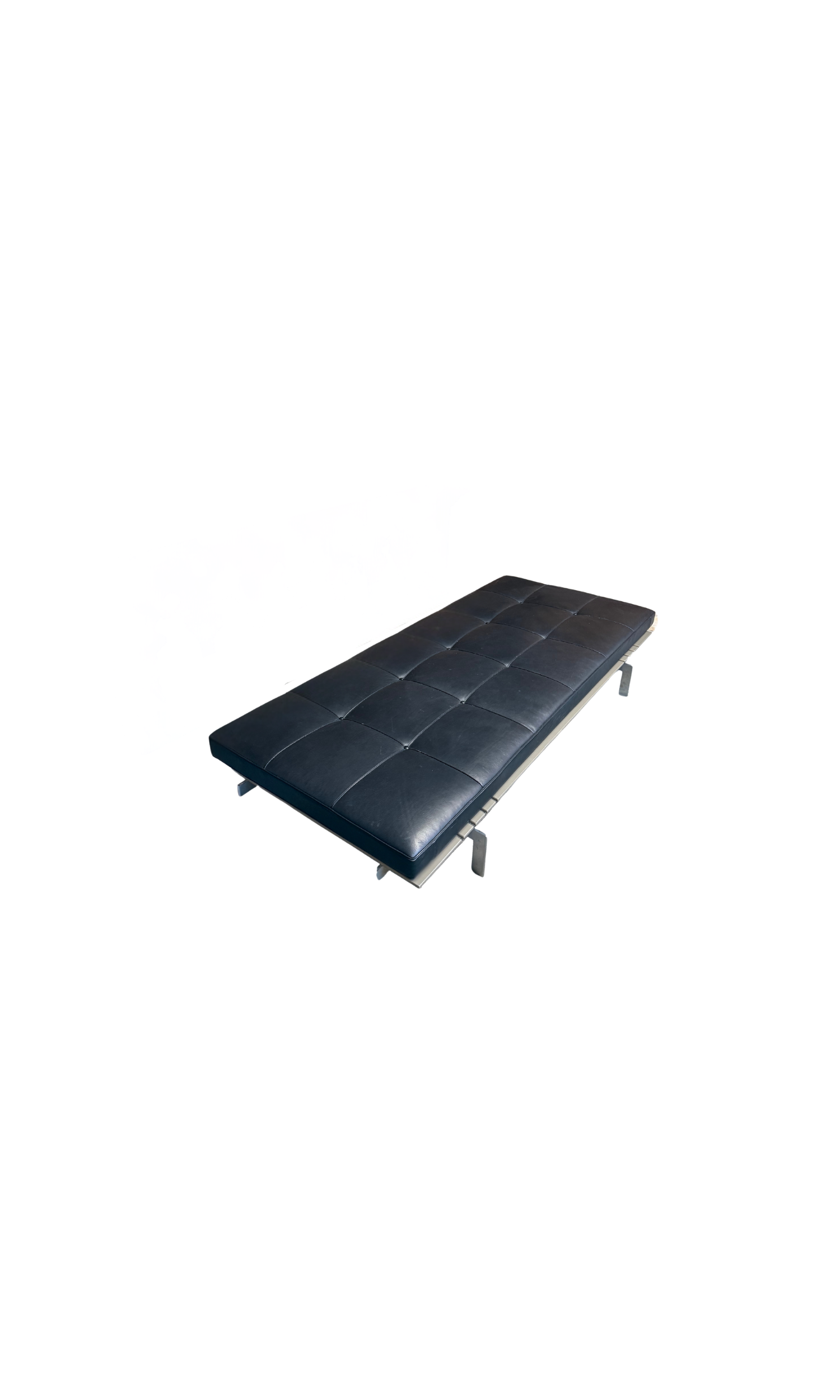
An exceptional, authentic vintage mid-century masterpiece - the PK80 Daybed - celebrated for its minimalist architectural profile. This piece features a premium tufted black leather mattress resting on a solid satin-brushed stainless steel frame and a painted wooden base. Featuring the original Fritz Hansen manufacturer's mark on the underside.
Designer: Poul Kjærholm (1957)
Manufacturer: Fritz Hansen (Denmark, c. 1990s)
Provenance: Private Estate (Edmonton, Alberta)
Dimensions: 31.5" W x 74.8" L x 11.8" H (80cm x 190cm x 30cm)
Condition Report:
Leather: Excellent vintage condition with a beautiful, rich natural patina; free of major stains, tears, or deep cracking.
Structure: Stainless steel frame is structurally sound with minimal age-appropriate wear.
Maintenance: Under-cushion rubber elastics have been completely refreshed with replacements. Three tufting buttons have fallen off (a straightforward restoration for a upholsterer, heavily factored into the quoted pricing).
Grete Jalk
The first lady of Danish modern
Origin: Copenhagen, Denmark
Founded: 1954 (Studio)
The Aesthetic: Organic Danish Modernism
Grete Jalk was a giant of 20th-century design. In a field dominated by men, she became one of the most influential Danish modernists. Jalk was known for her "economical" design—creating pieces that felt light and airy, making them perfect for modern (often smaller) urban living. She was a trained cabinetmaker (apprenticed under Karen Margrethe Conradsen), meaning her designs aren't just pretty—they are structurally superior. Her most famous work, the GJ Bow Chair, is in the permanent collection of the Museum of Modern Art (MoMA).
Rod Kagan
Titan of American metal sculpture
Origin: New Jersey / Ketchum, Idaho, USA
Founded: 1975 (North Fork Ironworks Studio)
The Aesthetic: Industrial Geometric Constructivism & Monumental Totems
Rod Kagan was a titan of American metal sculpture. Working primarily out of his rustic North Fork Ironworks studio in Ketchum, Idaho, Kagan synthesized industrial metalwork with native and tribal influences to create bold, architectural forms. Building on a childhood eye for mechanics and metal fabrication, his signature work features towering bronze, steel, and brass columns that feel both archaic and striking modern. Awarded a National Endowment for the Arts fellowship in 1984, Kagan's monumental totems and geometric pieces are held in major public collections and prominent institutions nationwide, including the Smithsonian American Art Museum.
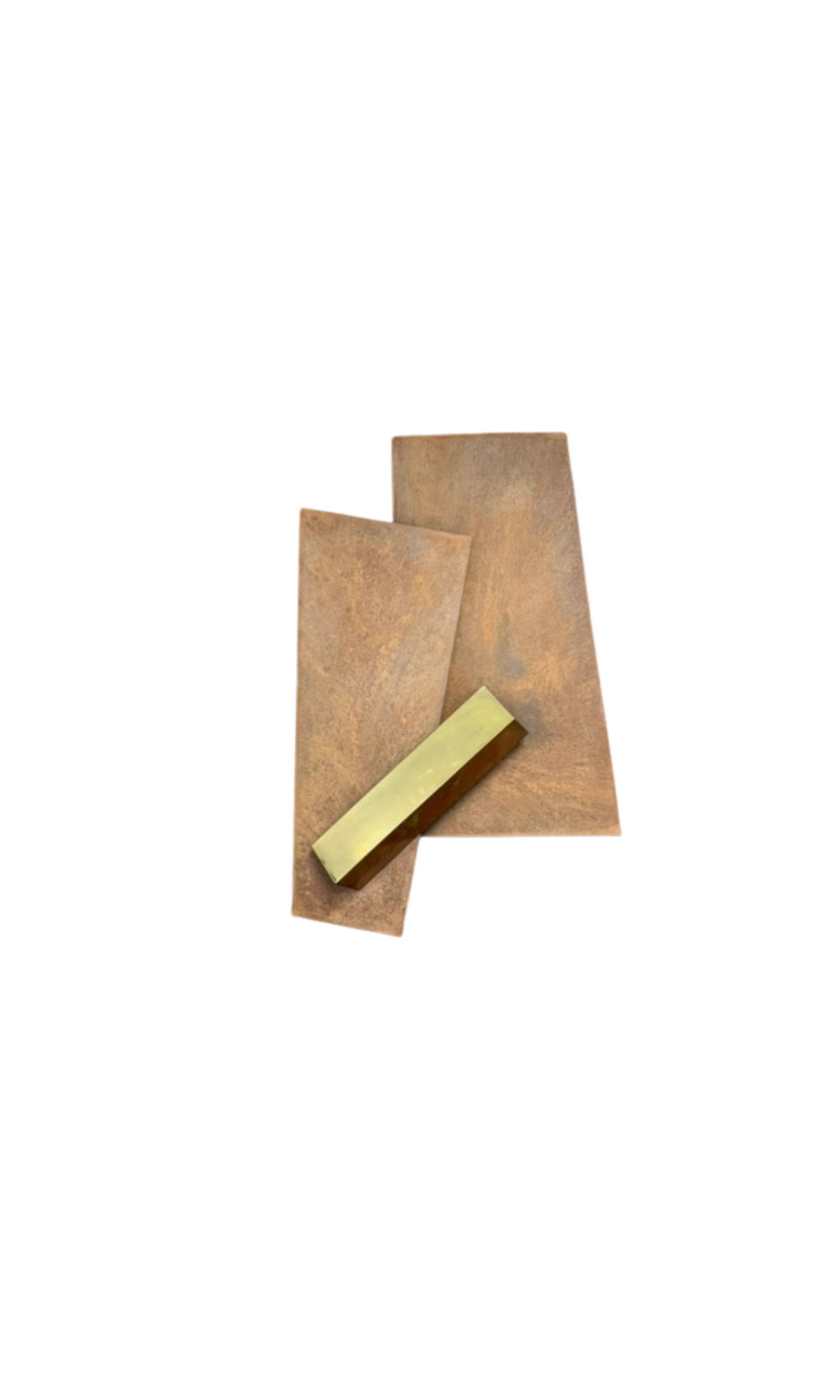
Acquire a piece of American architectural art history. This striking wall relief is an original, registered work by the highly collected modernist sculptor Rod Kagan. Rod Kagan was a recipient of the prestigious National Endowment for the Arts Fellowship. His works are permanently installed in over 38 major US cities and featured in the Boise Art Museum and the Smithsonian. Known for his technical mastery of metals, this piece beautifully showcases Kagan’s signature play on geometric asymmetry, crisp angles, and high-contrast material finishes.
This piece (c. 1981) is anchored by two overlapping, angular sheets of patinated bronze. The surfaces feature a rich, earthy, rust-toned oxidation that offers a deeply textured, organic matte finish. Slashing across the bronze canvas is a heavy, mirror-polished architectural column crafted from solid brass. It is signed, dated, titled and edition 8/12.
True to Kagan's influences—which root back to early American mineral mines and tribal totem geometry—this piece projects an aura of permanence, weight, and elite post-modernism. This piece is a high end, large fine art show piece for your home.
Designer: Rod Kagan (1940 - 2010)
Period: 1981
Edition: 8/12 Signed, dated, titled, and numbered verso: Rod KAGAN
Dimensions:9.75" D x 35.25" W x 52" H
Condition Report:
Overall good condition with oxidation/rust to backing, likely inherent. Scattered minor scuffs and scratches commensurate with age. Scuffing to corners of brass component, which also has some areas of smudged staining.
Pascal Mourgue
The sculptor of outdoor casual luxury
Origin: Paris, France
Founded: 1985 (First collaboration with Fermob)
The Aesthetic: Avant-Garde Minimalist Utility
Pascal Mourgue was a poetic, visionary force in modern industrial design, celebrated for bringing an artistic, sculptural sensibility to everyday functional furniture. Striking a brilliant balance between raw fine art and commercial practicality, Mourgue's legendary collaborations with French outdoor manufacturer Fermob transformed exterior spaces into open-air living rooms. His work is characterized by "fluid-line" geometry and a master-class manipulation of metal—specifically utilizing slender steel wires, lightweight aluminum, and innovative technical fabrics like outdoor netting.
Mourgue’s designs were intended to project an image of weightless modernity, casual elegance, and enduring simplicity; they are physically light, intellectually playful, and visually stripped of unnecessary pretense. By leaning into his background as a sculptor to soften industrial materials, he became a foundational designer for Fermob’s contemporary renaissance, creating award-winning collections like Lune d'Argent and Face à Face that remain timeless benchmarks of 20th-century European leisure.
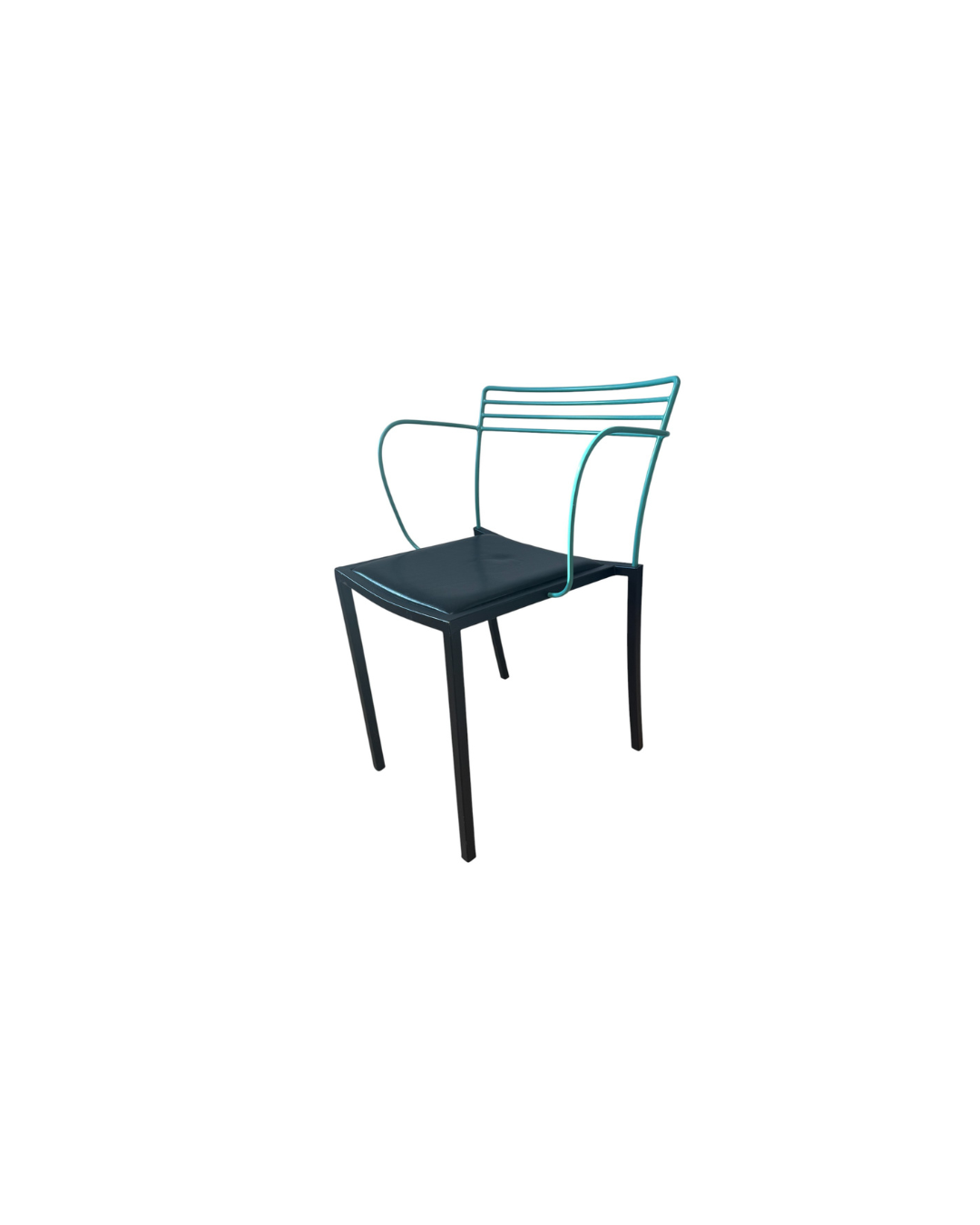
This "Piccolo" armchair was designed by Pascal Mourgue for the Fermob house around 1990. The structure of the armchair is in charcoal metal and the openwork back is lacquered in a vibrant and unique TEAL. It has a black leather padded seat that is in very good condition. Although this chair has some marks on the lacquer it remains a solid and a distinct piece.
Adrian Pearsall
The rockstar of American mid century design
Origin: Pennsylvania, USA
Founded: 1952 (Craft Association)
The Aesthetic: Sculptural Atomic Modernism
Adrian Pearsall was an architect who traded blueprints for upholstery, forever changing the landscape of American interior design. In 1952, he founded Craft Associates, a company that would become the vanguard of the "Atomic Age" aesthetic. While his contemporaries in Scandinavia were focused on quiet minimalism, Pearsall went for the dramatic—pioneering the iconic "Gondola" sofas, high-back "Jacks" chairs, and his signature sculptural walnut bases.
Pearsall’s genius lay in his ability to make furniture look like it was in motion. His pieces often feature sweeping, expressive lines and exaggerated proportions that served as the centerpiece for the most stylish homes of the 1950s and 60s. Today, Pearsall is a "designer’s designer," beloved by collectors for his rare ability to blend avant-garde architectural forms with deep, loungy comfort. To own a Pearsall is to own a masterclass in Mid-Century swagger.
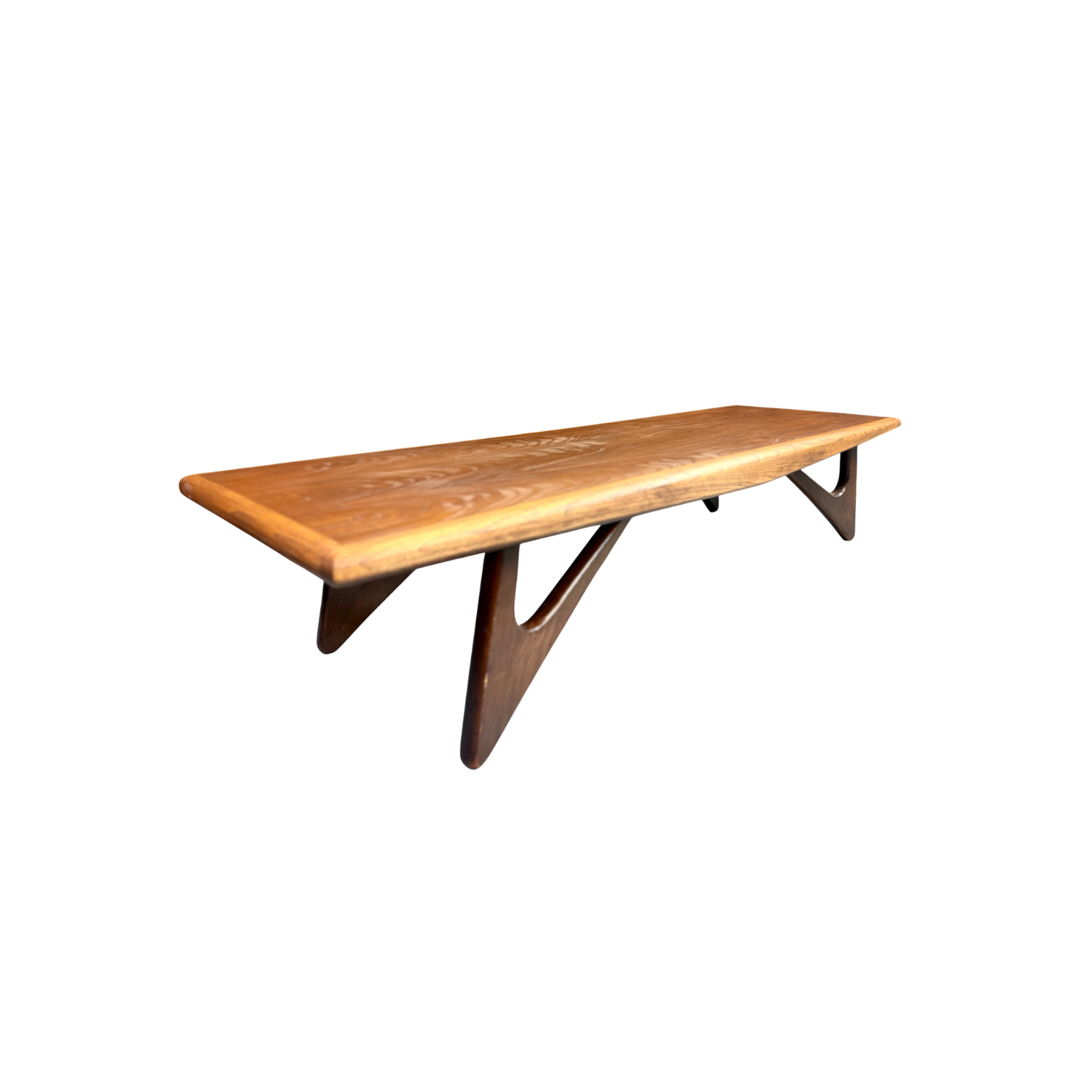
A sculptural coffee table with a beautiful rich walnut top. The top sits on Adrian Pearsall inspired surfboard style v-shaped legs. This table could also be used as a bench. Matching side tables are also available for purchase.

This newly restored walnut end table is a stunner! Check out the beautiful grain on the table top and the boomerang styling of the base in Adrian Pearsall style. A matching, but slightly different, side table and the coffee table are also available.
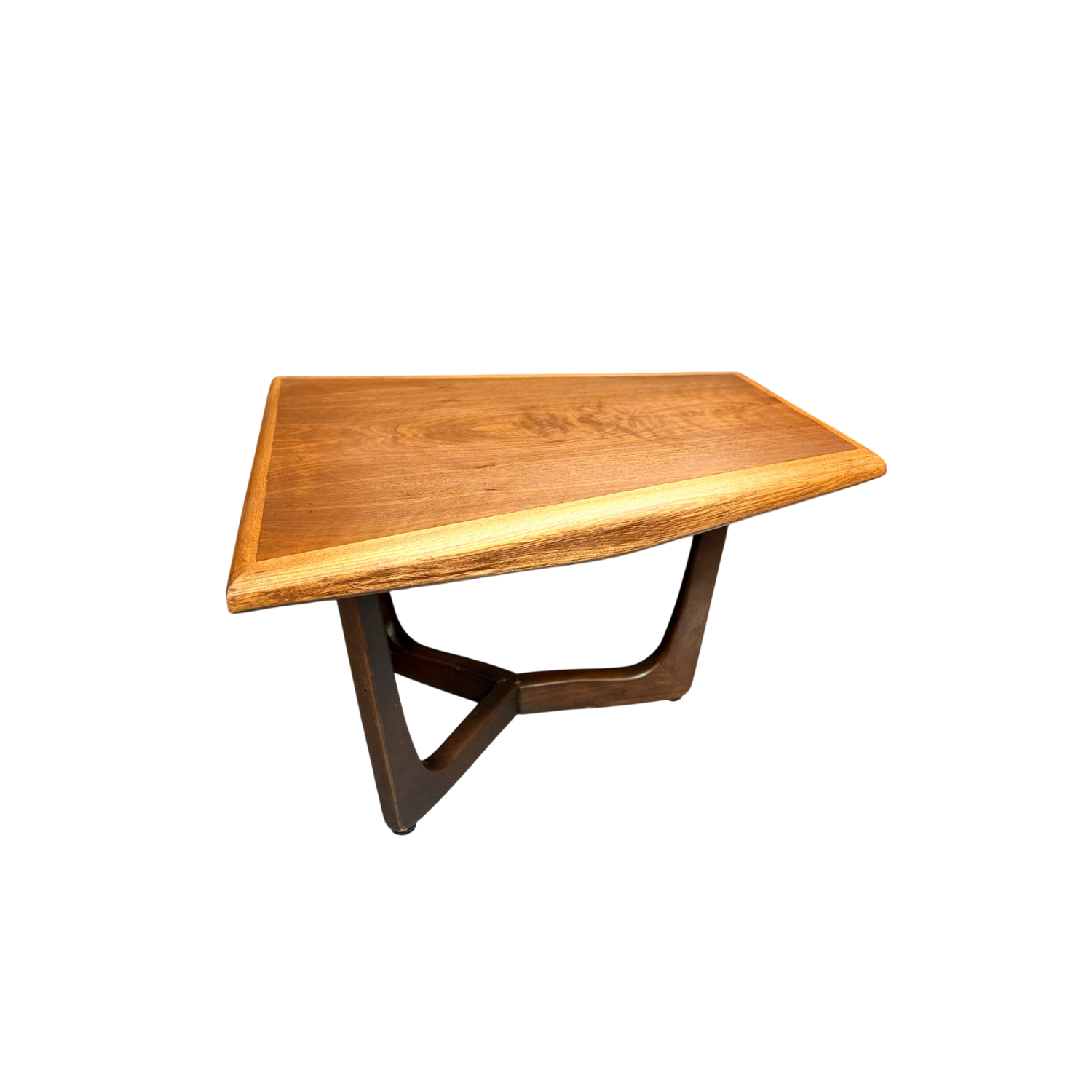
This newly restored walnut end table is a stunner! Check out the beautiful grain on the table top and the boomerang styling of the base in Adrian Pearsall style. A matching, but slightly different, side table and the coffee table are also available.
Nicoletti Salotti
The family-run dynasty from Matera, Italy
Origin: Matera, Italy
Founded: 1950s
The Aesthetic: Bold Italian Luxury & Postmodern Comfort
Nicoletti Salotti is a benchmark of Italian excellence, synonymous with the "Made in Italy" hallmark of quality. Based in the historic city of Matera the brand draws inspiration from its heritage to create furniture that balances tradition with avant-garde design.
Founded by the Nicoletti family, the company rose to international prominence for its mastery of leather upholstery. They were among the first Italian firms to successfully bridge the gap between high-concept "artistic" furniture and functional, ergonomic seating.
In the 1980s, Nicoletti broke away from traditional "square" sofas. They pioneered the curvilinear, oversized silhouettes that defined the "80s Italian Glamour" look. Today, vintage "Salotti" pieces (1970s–1990s) are currently exploding in popularity not only because they represent a fearless era of Italian design, but because of top-grain, thick, buttery leather hides that the pieces are upholstered in.
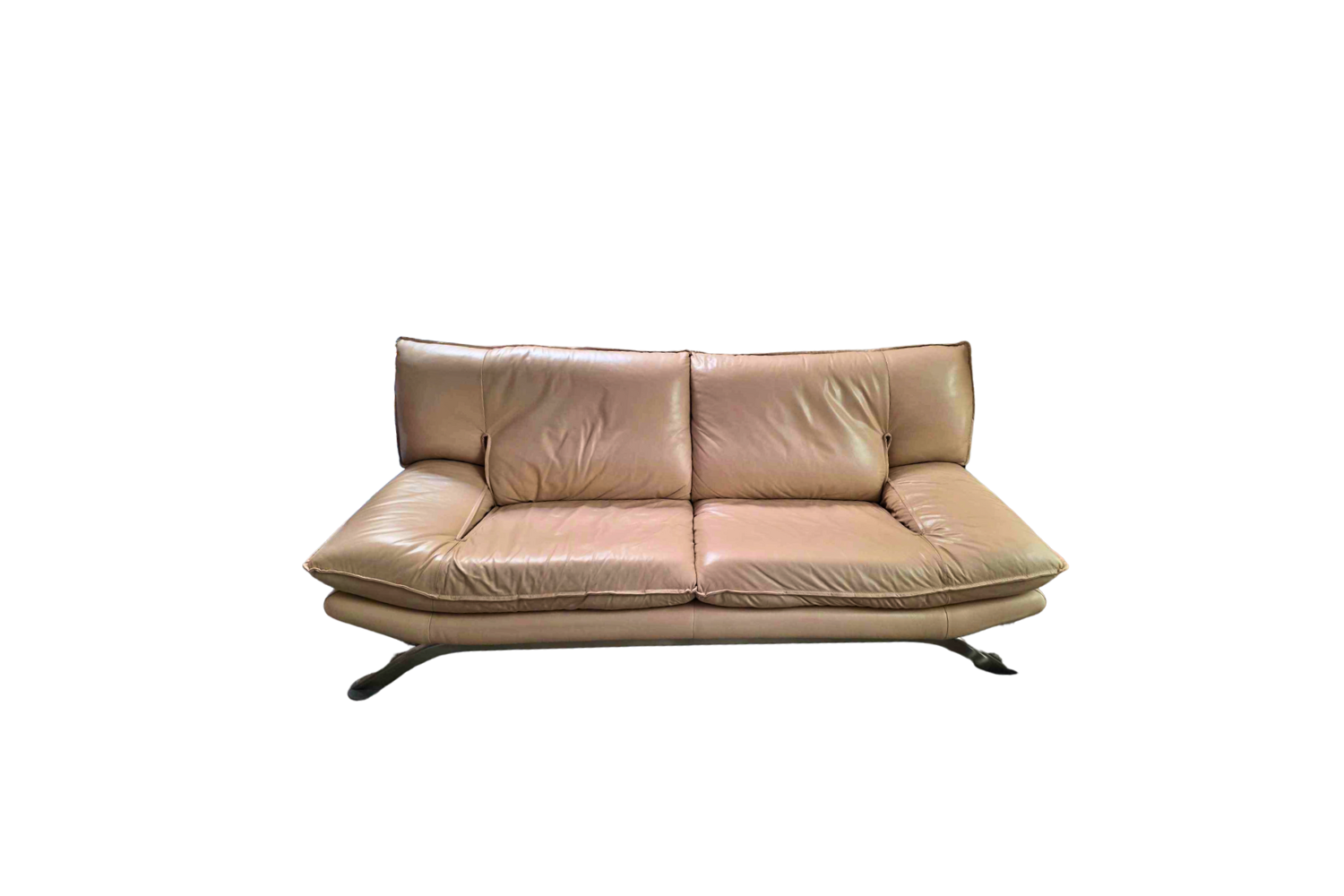
A stylish post modern superior quality Italian loveseat by Nicoletti Salotti (c. 1990). This loveseat is upholstered in a supple salmon leather that has been meticulously cared for by its original and only owner. The loveseat has clean sculptural lines and brushed stainless steel legs. A matching (larger) sofa is also available.
Gaetano Sciolari
The maestro of mid-century lighting
Origin: Rome, Italy
Founded: 1892 (Family firm)
The Aesthetic: Space age and futuristic glamour
Gaetano Sciolari was the crown prince of Italian lighting design. Coming from a family of light-smiths dating back to 1892, Sciolari rose to fame in the 1950s and 60s as the creative director for Stilnovo. He is best known for his "Cubic" and "Molecular" chandeliers—futuristic, multi-light fixtures that look like frozen constellations of chrome and brass. If you own a Sciolari, you own a piece of high-society Italian history that appeared in everything from 1970s film sets to elite penthouses.
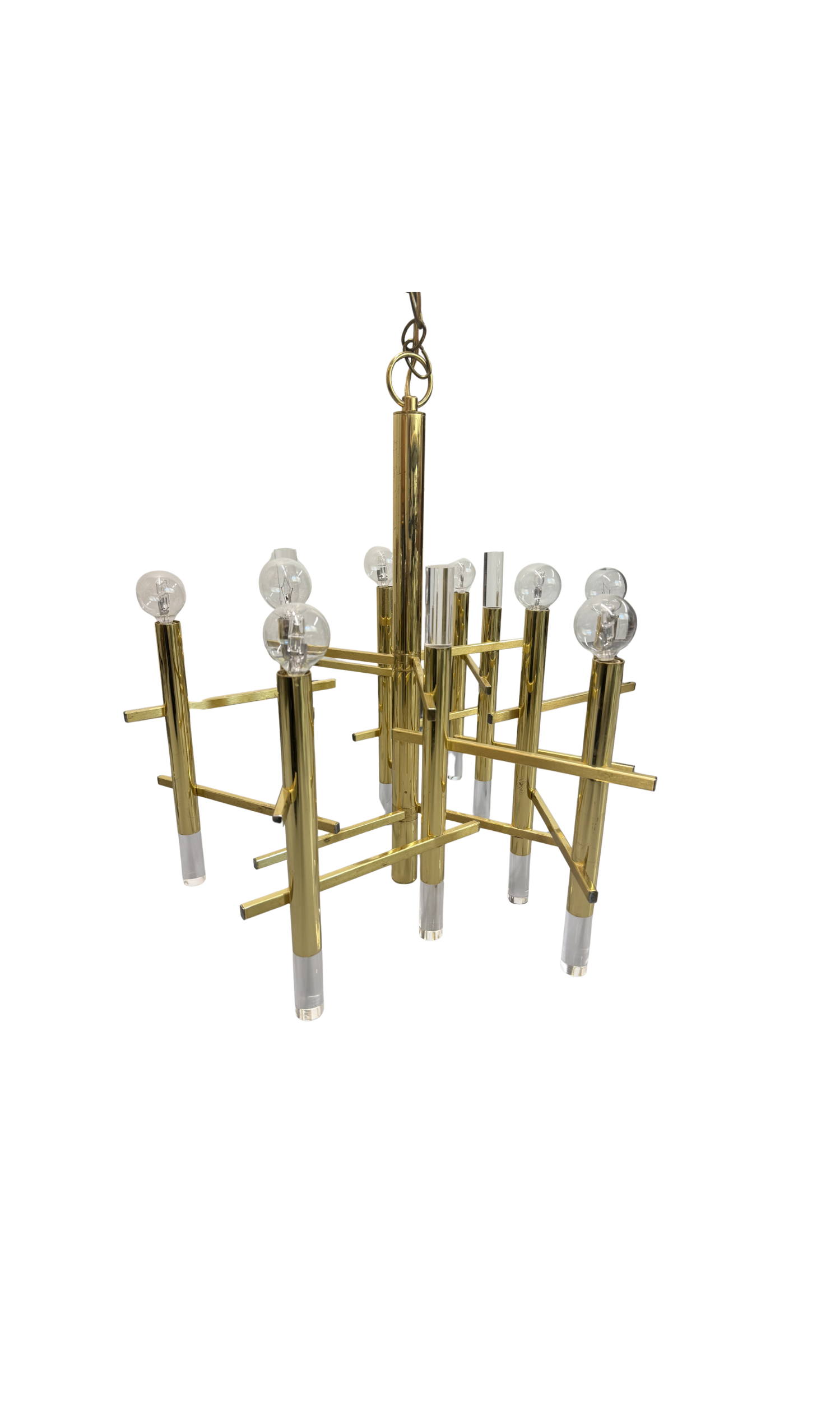
Make a bold statement with this masterful piece of 1970s lighting design. Attributed to the legendary Gaetano Sciolari, this chandelier features a complex, multi-tiered "cubic" arrangement of polished brass cylinders that is characteristic of Sciolari’s iconic style. Alternating with the brass pillars are crystal-clear lucite (acrylic) rods. Designed with multiple light points (all rewired), this chandelier provides a rich, warm glow. The exposed bulbs atop the brass "candles" highlight the metallic sheen and the clarity of the Lucite.
This piece captures the transition from the space-age 1960s to the more textured, opulent 1970s, making it a highly sought-after collector's item. This Sciolari piece isn't just a lamp; it’s a functional work of art that retains its value and prestige. Recently rewired and ready to go!

Does anyone do lighting better than Sciolari? Unlike most flushmount fixtures, this light is a rare piece of art. Originally styled by Sciolari for Lightolier, this fixture is a mix of chrome and brass with glass rods. It is two tiered and has 9 sockets, so not only is it stunning, but it also gives off a tremendous amount of light. The light is tempered into a luminous glow by its numerous glass rods.
Maison Jansen
The arbiter of 20th-century opulence
Origin: Paris, Fance
Founded: 1880 (by Jean-Henri Jansen)
The Aesthetic: Theatrical Neoclassicism meets Hollywood Regency Glamour
Maison Jansen was a visionary force in the global luxury landscape, known for bringing an unparalleled, drama-infused sophistication to the world's elite. As the world's first truly global interior design firm, Jansen bridged the gap between historical European grandiosity and forward-thinking modernism. The house’s work is characterized by a "high-low" material harmony and a master-class mix of design philosophies, specifically combining hand-stitched premium leathers with faux-bamboo metalwork, mirrored glass, and solid brass detailing.
Jansen’s designs were intended to project an image of absolute success, elite stature, and curation; they are physically substantial, historically rooted, and visually striking. By reimagining utilitarian concepts—like campaign military folding frames—through a lens of extreme luxury, the firm became the go-to design house for palaces, the White House, and fashion icons, creating pieces that remain timeless benchmarks of 20th-century international elegance.
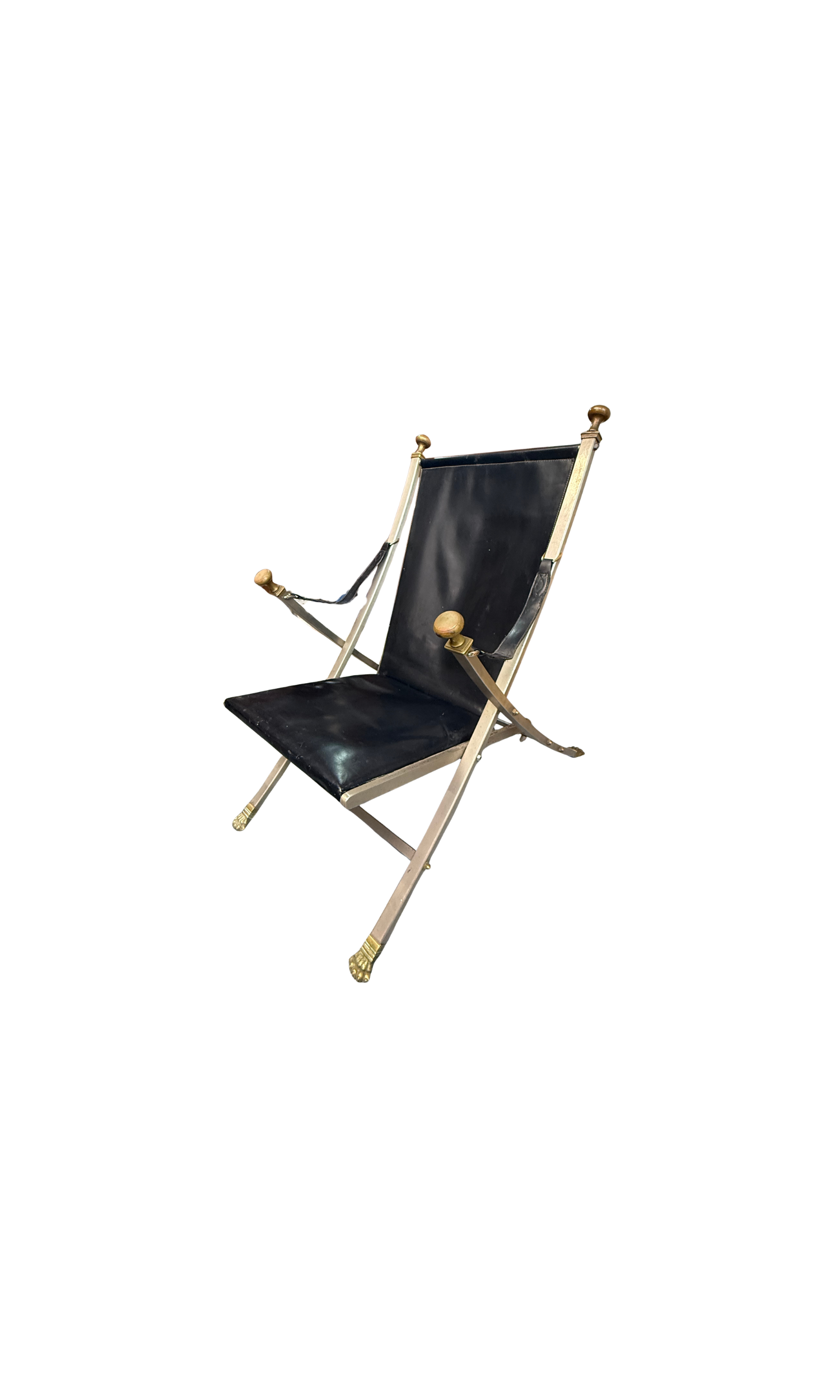
Make a commanding, sophisticated statement with this vintage (c. 1 960s) Hollywood Regency campaign-style folding lounge chair. Channeling the mid-century opulence of French design houses like Maison Jansen, this piece perfectly balances rugged, portable military history with elite, neoclassical elegance.
The chair is engineered from a heavy-gauge, durable metal frame, offering a brilliant architectural silhouette. The thick premium black leather forms the deep sling seat, high-back support, and structural buckle-strap armrests. The chair also features striking, solid brass elements including prominent spherical finials crowning the backposts and exquisitely detailed brass hoof feet stabilizing the X-frame base. True to its campaign roots, the chair smoothly folds flat, making it as versatile as it is visually captivating.
An exceptional accent chair for an executive study, a moody modernist living room, or styled alongside a minimalist travertine coffee table to let its rich textures shine.
Michael Vanderbyl
The graphic poet of the salifornia school
Origin: San Francisco, USA
Founded: 1973 (Vanderbyl Design)
The Aesthetic: Graphic Postmodernism
Michael Vanderbyl is a polymath of American design whose work helped define the "California School" of postmodernism. Unlike many furniture designers who come from an architectural background, Vanderbyl approached furniture through the lens of a graphic artist, resulting in pieces with a distinct "drawn" quality and lean, expressive silhouettes. His work is celebrated for its clarity, wit, and sophisticated use of geometry—blurring the lines between fine art and functional objects. A leader in the 1980s and 90s design movement, Vanderbyl has received numerous accolades, including the AIGA Medal, and his work is held in the permanent collection of the San Francisco Museum of Modern Art (SFMOMA). His furniture, often characterized by its refined proportions and bold, minimalist gestures, represents a pivot away from mid-century excess toward a more cerebral, graphic elegance.

This handsome chest is made by Bolier as part of its Rosenau collection. The chest has a rich, swirl mahogany veneer with a high gloss on it. The chest is second hand so there are some scratches and marks on the chest (visible in pictures). The price reflects the marks on the piece - this chest sells for over $7,000 USD new. Overall a stunning piece!
Michael Vanderbyl designed the piece. He is a multidisciplinary designer who has been inducted into the Interior Design’s Hall of Fame. His work is in the permanent collections of the San Francisco Museum of Modern Art, the Denver Art Museum, the Cooper-Hewitt and the Library of Congress.